
How Much Does It Cost to Open a Dive Shop?
The cost of opening a dive shop depends on where you operate, which services you offer and how much infrastructure you need to own.
A small training business using rented facilities has a different budget from a dive centre with retail premises, a compressor and its own boat. That makes a single headline figure a poor starting point for a serious investment decision.
To calculate your funding needs, separate the costs of getting ready to open from the cash required to keep operating while bookings develop.
This guide explains the main expenses, shows an illustrative startup budget and helps you identify where you can reduce spending without weakening your operation.
What Determines the Cost of Opening a Dive Shop?
Before gathering prices, define the business you intend to launch.
Will you primarily teach courses, sell equipment, run guided dives or combine several services? Will you serve local residents or depend on visiting tourists? Which facilities will you own, rent or access through partners?
These decisions shape your budget.
| Business model | Main budget considerations |
|---|---|
| Training operation using rented facilities | Training equipment, pool access, transport, insurance and customer acquisition |
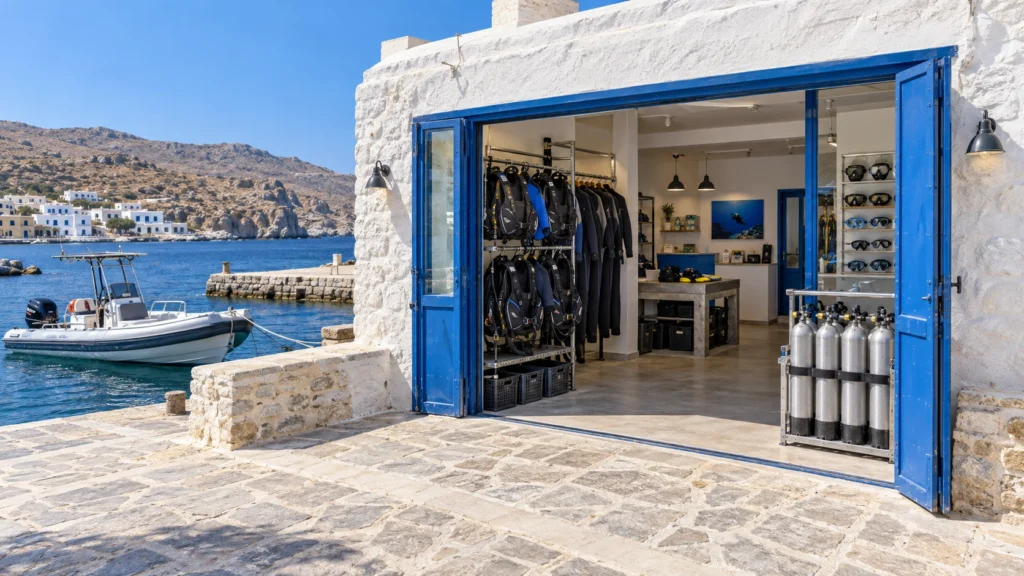
| Shore-based dive centre | Premises, rental equipment, storage, staffing and dive-site access |
| Retail dive shop with training | Fit-out, opening stock, rental equipment and training facilities |
| Boat-based dive centre | Vessel purchase or charter arrangements, crew, fuel, maintenance and docking |
Start with the services you can realistically deliver. Price future expansion separately so it does not obscure the amount needed for launch.
1. Premises, Deposits and Fit-Out
Premises costs extend beyond the advertised monthly rent.
You may need a deposit, advance rent, utility connections, signage and alterations before the space is suitable for your activities.
Consider whether the property provides:
- Secure equipment storage.
- Suitable washing and drying areas.
- Space for customers to check in and prepare.
- Appropriate retail or classroom areas.
- Practical access for deliveries and transport.
A low rent can become expensive if the building needs substantial work. Obtain quotes for essential alterations before committing.
Check that the intended activities are permitted at the property. Confirm the requirements relevant to your plans with the appropriate local authorities and advisers.
2. Rental Equipment and Training Gear
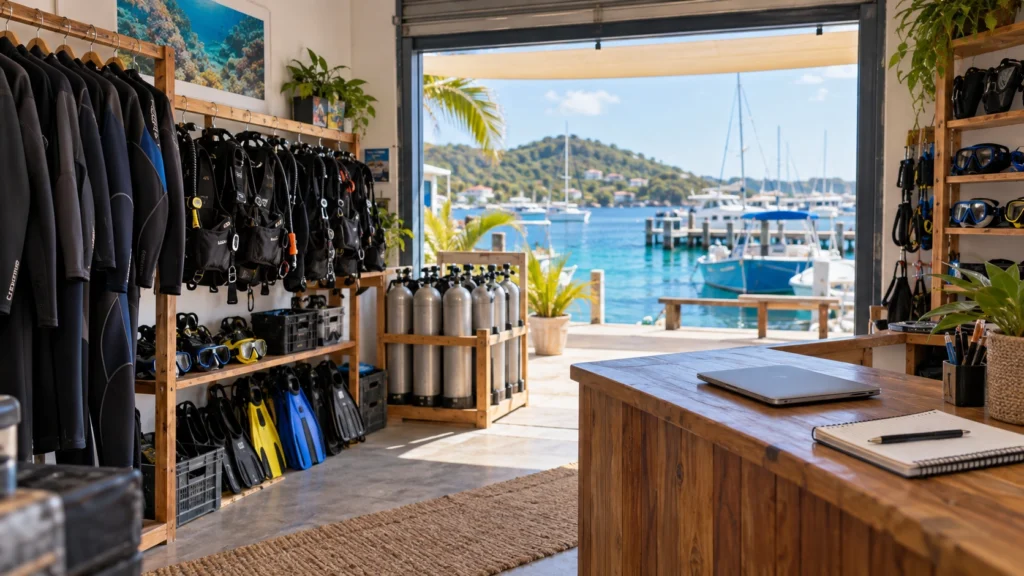
Equipment is a significant part of a dive shop startup budget, particularly if you will serve beginners or provide rentals.
Your requirements may include BCDs, regulators, wetsuits, masks, fins, cylinders, weights and dive computers, alongside equipment appropriate to your activities and emergency arrangements.
Build the equipment list around your planned capacity.
For example, serving eight customers at once requires more than eight interchangeable sets. You need a suitable range of sizes and a plan for equipment undergoing inspection, servicing or repair.
Compare the total cost of ownership. Purchase price, durability, servicing support and parts availability all affect what equipment costs over time.
For used equipment, establish its condition, service history and suitability before including it in your operating stock. Allow for inspection, servicing and any necessary replacement.
3. Opening Retail Stock
Retail inventory ties up cash before a sale takes place.
An extensive product range may look attractive, but slow-selling items leave less money available for wages, rent and marketing.
Choose opening stock based on your target customers. Beginner students may need a different range from experienced technical divers or visiting holidaymakers.
Discuss minimum orders, delivery times, payment terms and warranty support with suppliers. Consider whether selected products can be ordered for customers instead of held permanently in stock.
Your budget should include delivery and applicable import costs where relevant, rather than relying solely on the supplier’s product price.
4. Compressors and Cylinder-Filling Facilities
If you plan to provide cylinder fills, investigate the complete installed cost.
Depending on the setup, your budget may need to cover the compressor, filtration, installation, electrical work, ventilation, testing, maintenance and staff training.
Confirm the requirements for your location and intended activities with competent specialists.
Compare ownership with purchasing fills from an established provider. Outsourcing may reduce initial spending, but assess transport, turnaround times, supply reliability and the effect on your schedule.
The right choice depends on expected demand and the full cost of each arrangement.
5. Boats, Vehicles and Transport
Owning a boat can substantially change both your startup budget and your ongoing commitments.
The purchase is only one expense. Your plan also needs to account for inspection, preparation, equipment, crew, insurance, docking, fuel and maintenance as applicable.
Forecast what happens when weather prevents departures or the vessel is unavailable.
Chartering a boat or partnering with an operator may be an alternative. Compare the cost per departure, capacity, availability and cancellation terms before deciding.
Apply the same thinking to vehicles. Buying, leasing and contracting transport create different combinations of upfront spending and recurring payments.
6. Insurance, Professional Advice and Business Setup
Budget for the professional support and setup work your operation needs.
Depending on your location and business model, this may include registration, accounting, legal advice, permits, insurance and relevant professional or training-agency fees.
Describe all planned activities when requesting insurance quotes. Understand the scope of cover, conditions, exclusions and payment schedule.
Costs and requirements vary between jurisdictions. Build this part of your budget from advice and quotes specific to your business.
7. Recruitment and Pre-Opening Wages
Your team may need paid time before the first customer arrives.
Allow for recruitment, induction, equipment preparation, procedure development and trial activities. Include any training needed for staff to carry out their assigned roles.
Clarify who will handle enquiries, teaching, guiding, equipment, payments and daily coordination.
Also account for your own income needs. If you defer your pay during launch, show how you will cover personal living costs and when the business is expected to support you.
8. Website, Booking Systems and Launch Marketing
Customers need to find your business, understand the offer and book.
Include website development, booking and payment tools, business photography, signage and launch marketing in your budget. Separate initial setup fees from recurring subscriptions and transaction charges.
Choose marketing activity that matches your audience. A tourist dive centre might prioritise accommodation partnerships, while a shop serving residents may focus on local search and community relationships.
PADI’s advice for new dive-shop owners identifies insufficient marketing investment as a common startup mistake. Preserve enough funding to attract customers after the premises and equipment are ready.
An Illustrative Dive Shop Startup Budget
The following example shows how costs can be organised. These are hypothetical planning allowances in US dollars, not supplier quotes, industry averages or a recommended minimum investment.
The example assumes a modest leased shop offering training, rentals and limited retail, using external cylinder fills and contracted boat transport.
| Budget category | Illustrative allowance |
|---|---|
| Premises deposit and initial fit-out | $12,000 |
| Rental and training equipment | $18,000 |
| Opening retail stock | $8,000 |
| Setup advice, fees and initial insurance payments | $5,000 |
| Website, booking setup and launch marketing | $4,000 |
| Recruitment, induction and pre-opening wages | $3,000 |
| Subtotal before reserve | $50,000 |
| Contingency for unexpected setup costs | $5,000 |
| Working capital allowance | $24,000 |
| Illustrative funding requirement | $79,000 |
This example excludes buying a boat, vehicle, compressor or property. It also assumes no major building work. Applicable taxes, duties and other local costs must be identified and included in your own budget.
The $79,000 total demonstrates the calculation; it is not an estimate for every dive shop. Replace each allowance with evidence relevant to your planned operation.
How Much Working Capital Do You Need?
Working capital covers the period when customer receipts are insufficient to meet payments.
The US Small Business Administration’s startup-cost guidance distinguishes pre-opening expenses, required assets and cash needed to cover early operating deficits.
Prepare a monthly forecast showing when money will enter and leave the business. Include rent, wages, supplier payments, maintenance, marketing, relevant tax payments and other commitments.
Suppose your forecast shows cash falling $20,000 below the opening balance before recovering. That identifies a funding gap of $20,000. You would then assess the additional buffer needed for delays or weaker sales.
Test slower bookings and seasonal disruption. Base the reserve on the forecast and risks, rather than choosing an arbitrary number of months.
Keep contingency and working capital separate. Contingency covers unexpected setup spending; working capital supports ongoing operations.
How to Reduce Startup Costs
Reduce spending by changing the scope or timing of the launch.
You could:
- Rent training facilities instead of building your own.
- Contract boat transport before purchasing a vessel.
- Use an external filling provider.
- Start with a focused retail range.
- Negotiate staged deliveries or suitable supplier terms.
- Delay non-essential décor and additional services.
- Match initial capacity to evidence of demand.
Compare the longer-term effect of each decision. A lower upfront payment may create higher running costs or dependence on a supplier.
Preserve the equipment, competence, maintenance and operating arrangements required to deliver your activities properly.
Check Whether the Business Can Support Its Costs
Knowing the cost of opening a dive shop is only part of the decision. You also need to establish whether expected sales can support the operation.
Calculate the contribution from each service after its variable delivery costs. Use that contribution to assess how fixed expenses will be covered.
Check that the required sales volume fits your staffing, equipment and activity capacity. Then test whether your market research supports that level of demand.
Use the results in your dive shop business plan before committing significant funds.
Build Your Budget Around a Workable Operation
Your startup budget should explain what you need to buy, why you need it and how much cash must remain available after opening.
Gather local quotes, verify your assumptions and forecast a full seasonal cycle. This gives you a firmer basis for deciding how much to invest and which services to launch first.
To develop the management skills behind those decisions, explore the Dive Centre Operations & Management Professional course. It combines online learning with practical forms, checklists and templates for dive-centre operations.
Try the first module free as you prepare to build your business.