
A full boat and a busy shop don’t guarantee a healthy business. Many dive centres are fully booked and still struggle with cash flow, because prices were set by habit, copied from a competitor or cut to fill a quiet week. A clear dive centre pricing strategy replaces that guesswork with decisions based on your real costs, your capacity and the value you deliver.
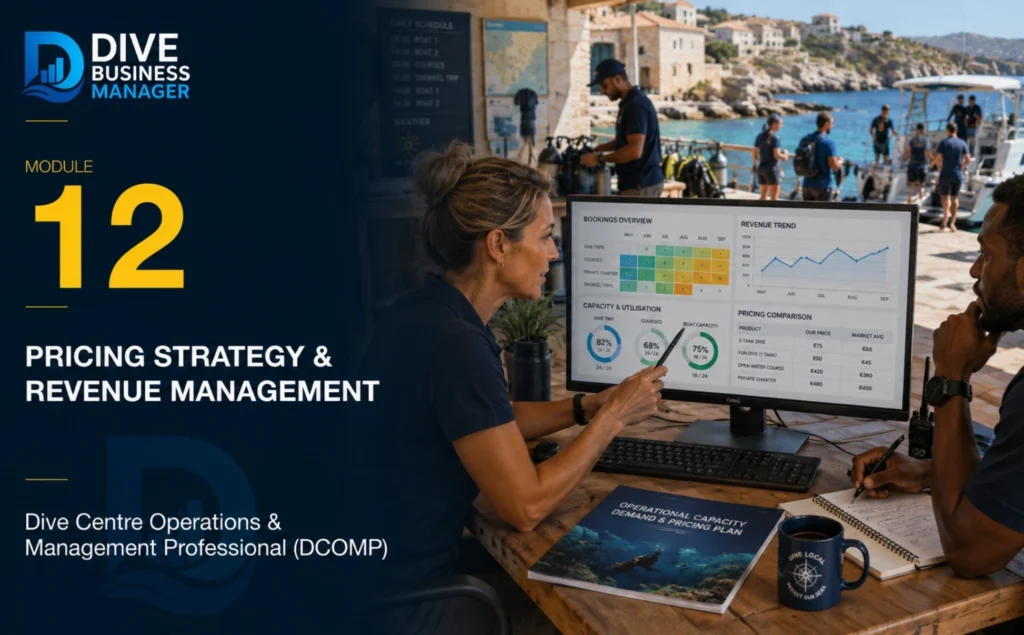
That’s the purpose of Module 12, Pricing Strategy & Revenue Management, part of the Dive Business Manager Dive Centre Operations & Management Professional (DCOMP) programme. It shows how informed pricing and revenue-management decisions keep a dive centre competitive, profitable and financially sustainable.
Start with the numbers: revenue, costs and profit
Good pricing begins with understanding where your money goes. Module 12 opens by separating revenue from profit, then breaks your costs into fixed costs, variable costs and overheads.
From there you calculate your operational cost per diver, the figure most pricing decisions should rest on, and run a break-even analysis for your products and services. When you know how many divers a trip or course needs before it covers its costs, every price you set has a purpose.
Pricing every part of your dive centre
Most dive centres sell several different things, and each needs its own approach. The module compares pricing models and then applies them to:
- dive trips
- recreational training programmes
- professional-level courses
- equipment rentals
- retail products, using suitable margins and mark-ups
Each lesson focuses on sustainable prices, so you can see how a rate affects your margin before you publish it.
Packages, seasons, discounts and commissions
Once the foundations are in place, the module covers the commercial tools that shape your income through the year.
You’ll learn to build bundles and packages that add value for the customer and the business, and to adjust prices in response to seasonal demand. You’ll also examine how to use discounts strategically without eroding profitability, and how to develop and evaluate commission structures.
From pricing to revenue management
A dive centre has limited capacity: boat spaces, instructor time, pool sessions and equipment. Dive centre revenue management applies pricing principles to that capacity and to demand, so you earn the most from what you have.
The module teaches you to forecast revenue using bookings, historical data and expected demand, and to monitor the profitability of individual products and services. You’ll use financial and operational key performance indicators to guide decisions, and carry out competitor analysis that goes beyond comparing price tags.
Module 12 at a glance
- Duration: about 2 hours
- Lessons: 26, including three quick quizzes
- Level: all levels
- Includes: knowledge-check quizzes, downloadable resources and templates, and a digital certificate of completion
- Prerequisite: no management qualification is needed, but a basic understanding of dive centre operations is recommended
About the Dive Centre Operations & Management Professional course
Module 12 is one of twenty modules in the Dive Centre Operations & Management Professional (DCOMP) programme, a comprehensive management qualification designed specifically for the scuba diving industry. Unlike traditional dive leadership programmes, which focus on skills in the water, DCOMP focuses on the business and operational side: how successful dive centres are managed, how effective systems are implemented, how teams are developed and how sustainable growth is achieved.
The programme is a dive centre management course built for current and aspiring managers, owners, instructors and operational staff. It gives you the knowledge, skills and practical tools to run a safe, efficient, profitable and professional dive operation.
Inside the course: all twenty modules
Foundations and daily operations
- Introduction to Dive Centre Management
- Day-to-Day Dive Centre Logistics
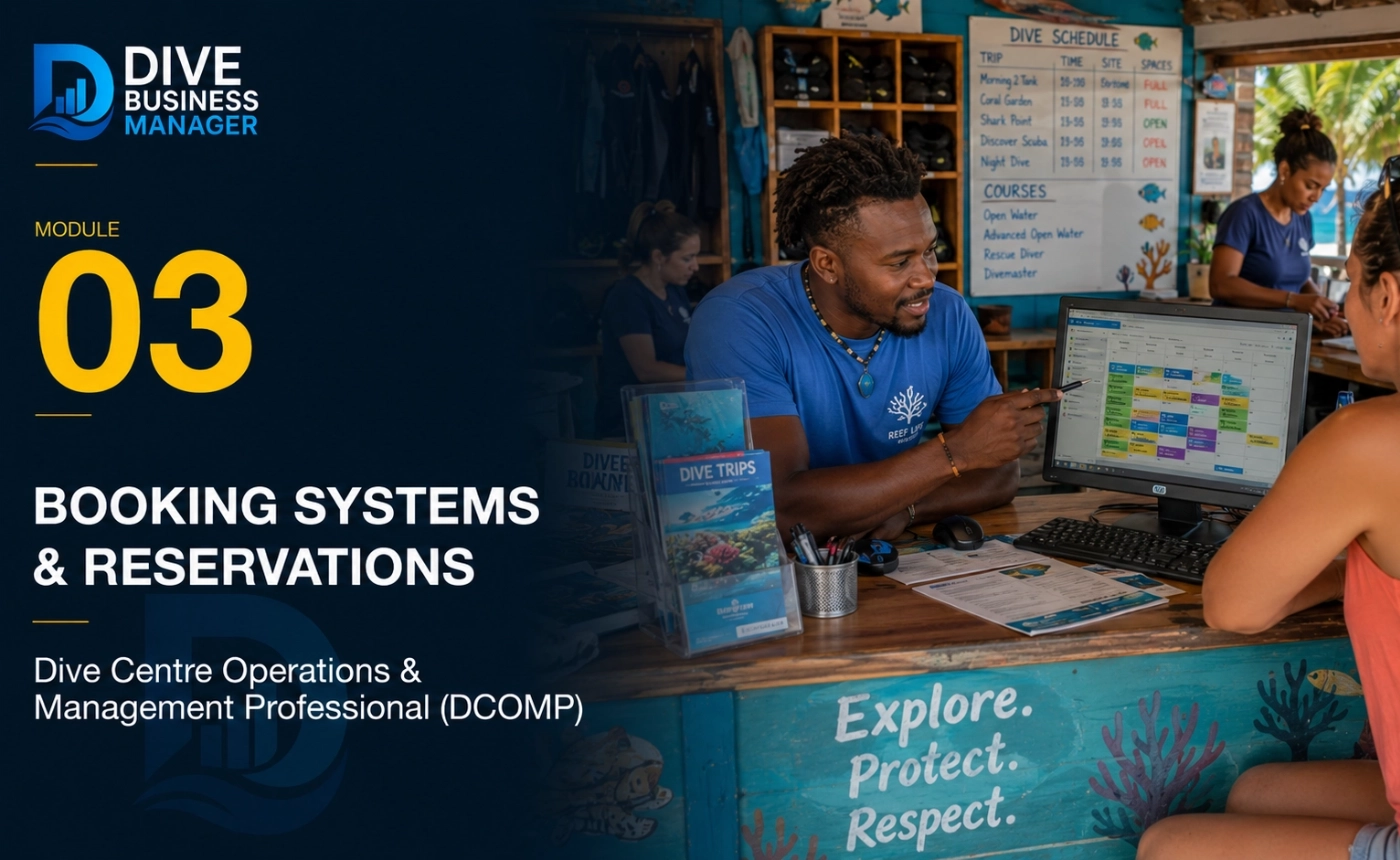
- Booking Systems & Reservations Management
The programme starts with the role of the manager and the daily running of the centre, from logistics to the reservations that keep boats and classes full.
People and teams
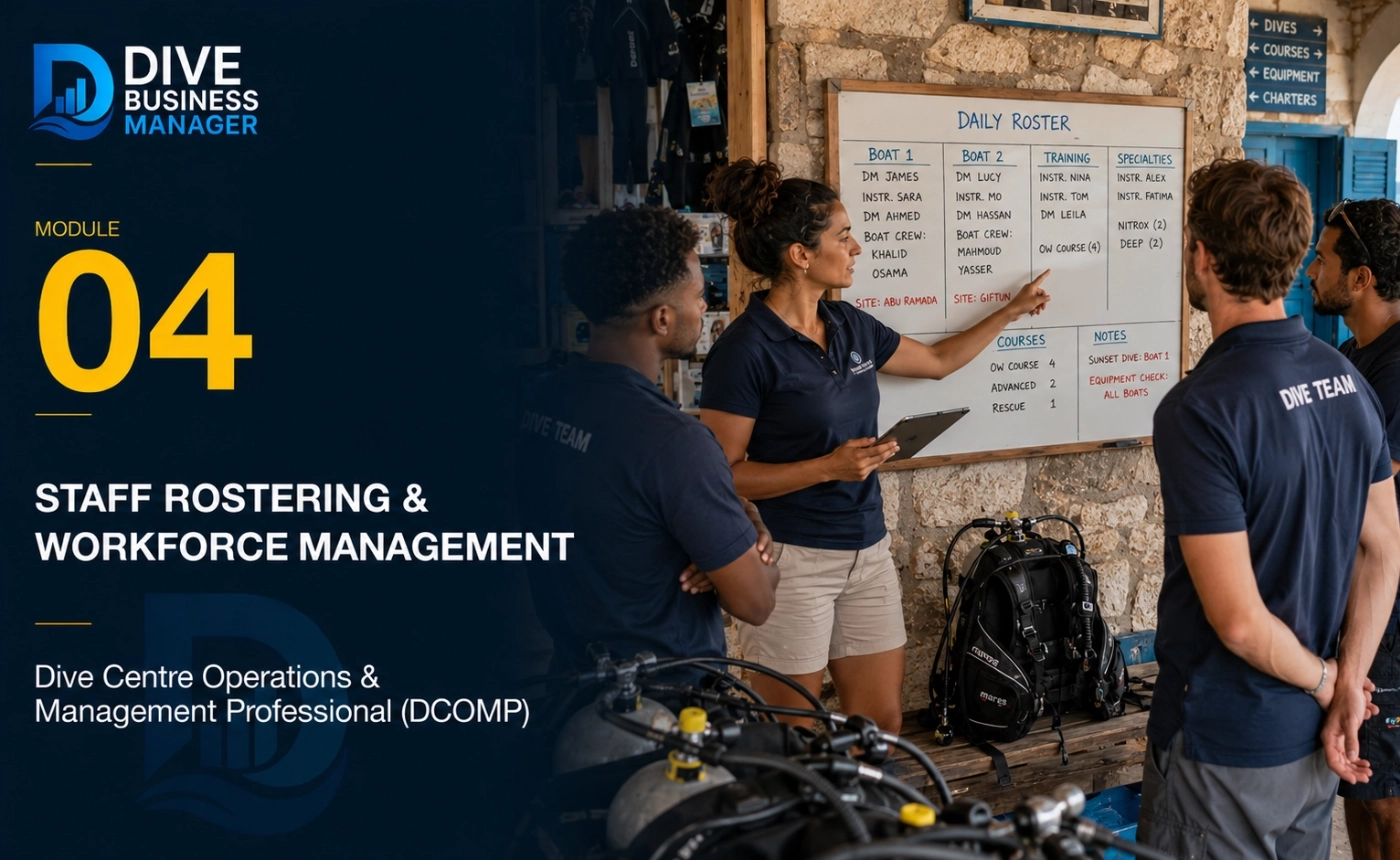
- Staff Rostering & Workforce Management
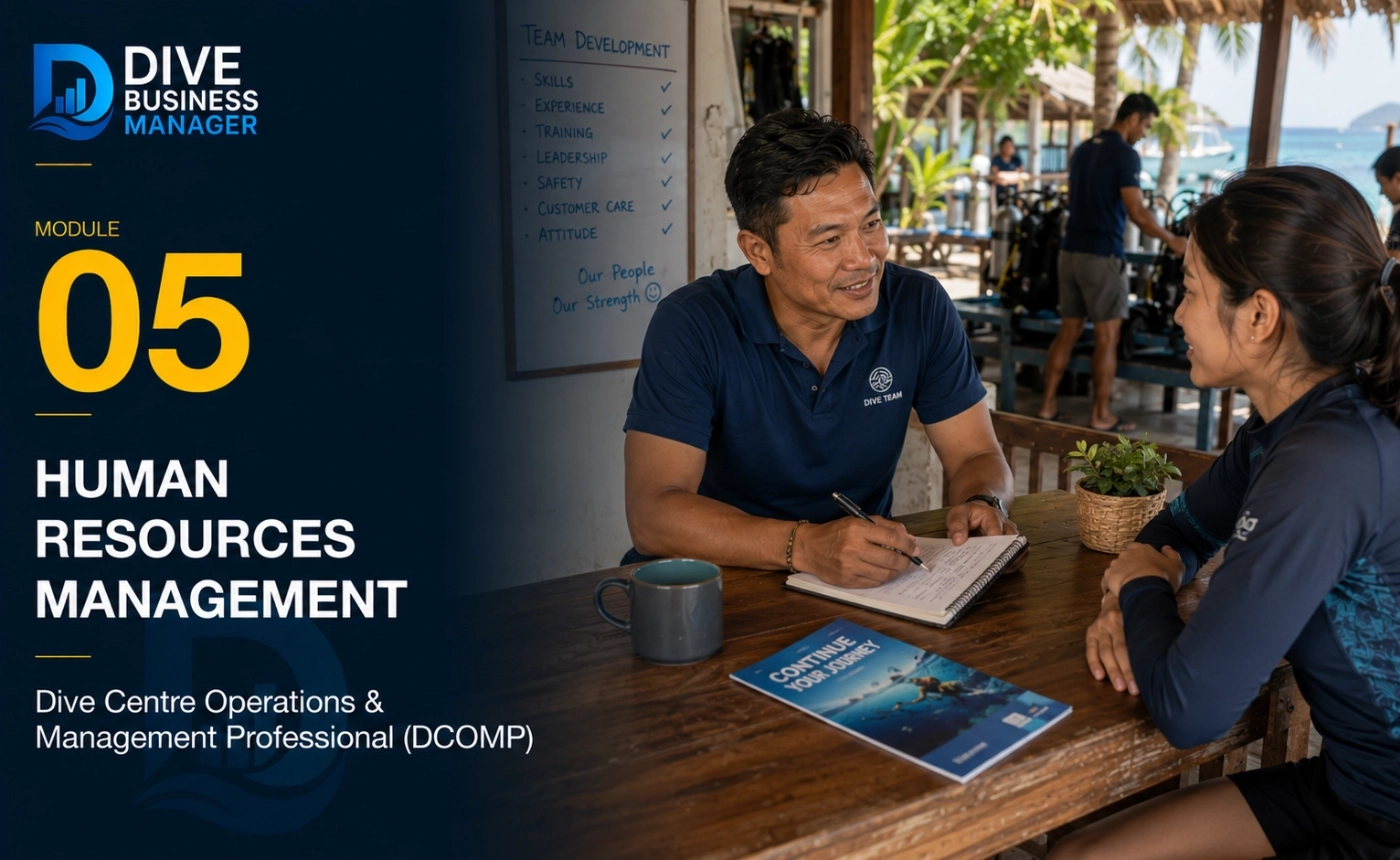
- Human Resources Management
These modules cover how to schedule, support and develop the team that delivers your dive operation.
Operations and systems
- Boat Operations & Fleet Management
- Systems & Procedures Implementation
Learn how to run your boats effectively and put consistent systems and procedures in place across the centre.
Compliance, customers and sales
- Dive Agency Liaison & Professional Compliance
- Customer Relations & Sales Management
Here the focus moves to working with training agencies, meeting professional standards and building strong customer relationships and sales performance.
Marketing
- Marketing & Graphic Design for Dive Centres
- Social Media Management for Dive Centres
Two modules dedicated to attracting and keeping customers through marketing, design and social media.
Pricing and revenue
- Pricing Strategy & Revenue Management
This is the module introduced in this article: setting profitable prices and managing revenue across the year.
Equipment, air and transport
- Equipment Inventory Management & Servicing
- Compressor Operations, Air Quality & Maintenance Management
- Vehicle Fleet Management & Transport Operations
- [Module 16 title to be added]
These modules deal with the physical assets that keep a dive centre running safely, from equipment and compressors to vehicles.
Inclusion, risk, finance and leadership
- Accessibility & Adaptive Diving Operations
- Insurance, Risk Management & Liability
- Accounting & Financial Management
- Leadership, Business Development & Strategic Planning
The programme closes with accessible diving operations, risk and liability, financial management and the leadership and strategic planning skills needed for long-term growth.
How the course works
DCOMP combines structured online learning with reviews and quizzes that encourage you to apply what you learn in a real dive centre environment. The programme includes:
- twenty online learning modules
- knowledge-check quizzes
- module activities and reflection exercises
- portfolio assignments
- a final examination
- downloadable resources and templates
- a digital certificate of completion
The full programme runs to around 40 hours of study across more than 500 lessons, quizzes and activities, and is open to learners at all levels. No previous management qualification is required, though a basic understanding of dive centre operations is recommended. Candidates should complete the modules in sequence, and must finish all module assessments, portfolio assignments and the final examination to receive the certificate.
Who it’s for
- dive centre managers and owners
- assistant managers and supervisors
- operations managers
- dive instructors seeking management responsibilities
- divemasters preparing for leadership roles
- resort dive centre staff and other professional dive industry personnel
Take control of your dive centre’s revenue
A strong dive centre pricing strategy does more than raise prices. It protects your margins, fills capacity at the right times and funds the equipment, staff and safety standards your reputation depends on.
Explore Module 12: Pricing Strategy & Revenue Management, or see the full Dive Centre Operations & Management Professional course to find out how all twenty modules fit together.
Notes
- Send me the Module 16 title and I’ll slot it in. Until then, please don’t publish the placeholder.
- Please add the exact DCOMP course page URL to the final link.
- If you’d like each module to have its own short description, send me the overview text from each module page and I’ll add them.
- The keyphrase appears in the title, meta description, slug, opening paragraph, closing section and one H2 variant, with “dive centre revenue management” and “dive centre management course” as secondary phrases.