
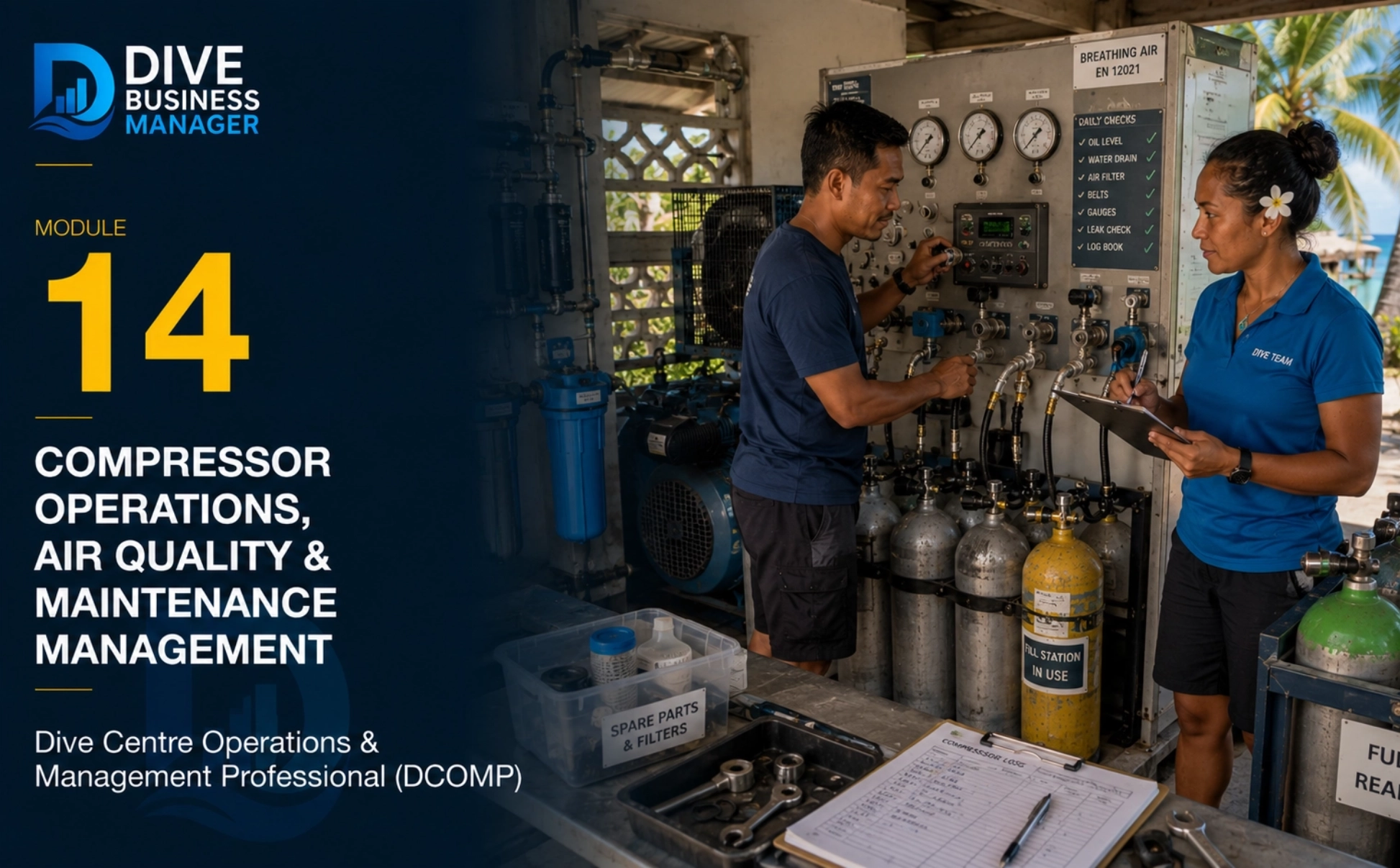
Module 14: Compressor Operations, Air Quality & Maintenance Management
Wishlist Share

About Course

This module explores how safe operating procedures, effective maintenance and rigorous air-quality controls support reliable dive centre compressor operations.


Learners examine compressor types and components, key hazards, operator responsibilities and the standards required for a safe, well-managed compressor room.


The module covers air-intake placement, pre-start inspections, start-up procedures, operational monitoring, condensate management and accurate logbook completion.


It also addresses air-quality testing, filtration, compressor oil, maintenance schedules, spare parts, downtime and Nitrox-compatible operations.


Learners will consider budgeting, environmental responsibilities and performance indicators as part of a complete compressor management system.

What Will You Learn?

  • Explain the role of a compressor in dive centre operations.
  • Identify common compressor types and their applications.
  • Describe the function of principal compressor components.
  • Recognise and control key compressor-related hazards.
  • Explain the responsibilities of an authorised compressor operator.
  • Establish and maintain suitable compressor-room conditions.
  • Position and monitor air intakes to reduce contamination risks.
  • Conduct and document a thorough pre-start inspection.
  • Follow safe compressor start-up and shutdown procedures.
  • Monitor pressure, temperature, sound and other operating conditions.
  • Manage condensate safely and responsibly.
  • Maintain complete and accurate compressor logbooks.
  • Explain applicable breathing-air quality requirements.
  • Coordinate air-quality testing at suitable intervals.
  • Manage filtration systems and filter replacement schedules.
  • Select, monitor and handle compressor oil correctly.
  • Plan routine, preventative and corrective maintenance.
  • Maintain an appropriate stock of essential spare parts.
  • Prepare contingency plans for compressor downtime.
  • Apply additional controls to Nitrox-compatible operations.
  • Develop a realistic compressor operating and maintenance budget.
  • Reduce the environmental impact of compressor activities.
  • Build a documented compressor management system.
  • Monitor safety, reliability and cost using relevant KPIs.

Course Content

Module 14- Compressor Operations, Air Quality & Maintenance Management
Learn how to manage compressor operations safely and effectively through proper maintenance, air quality control, servicing schedules, risk management and compliance with industry standards.

  • Overview
  • Learning Outcomes
  • The Role of the Compressor
  • Compressor Types
  • Compressor Components
  • Compressor Safety
  • Compressor Operator Responsibilities
  • Quick Quiz 1
  • Compressor Room Standards
  • Air Intake Management
  • Pre-Start Inspection
  • Start-Up and Monitoring During Operation
  • Condensate Management
  • Compressor Logbooks
  • Quick Quiz 2
  • Air Quality Standards and Testing
  • Filtration Systems and Filter Management
  • Oil Management
  • Maintenance Categories
  • Spare Parts Management
  • Managing Downtime
  • Nitrox-Compatible Operations
  • Budgeting for Compressor Operations
  • Environmental Considerations
  • Building a Compressor Management System
  • Compressor KPIs
  • Quick Quiz 3

Earn a certificate

Add this certificate to your resume to demonstrate your skills & increase your chances of getting noticed.
selected template